
What is the Current Situation of Lowland Gorillas in the DRC? 2026 Update!
The Democratic Republic of Congo (DRC) is home to one of the world’s most remarkable yet critically endangered primates: the Eastern Lowland Gorilla, also known as Grauer’s Gorilla. These gorillas are the largest of all gorilla subspecies, inhabiting the dense forests of eastern DRC. Despite their ecological importance and cultural significance, their survival is under severe threat. This article explores the current situation of lowland gorillas in the DRC, examining population trends, geographic distribution, threats, conservation efforts, and the outlook for their future.
1. Eastern Lowland Gorilla Population Status & 2026 Trends
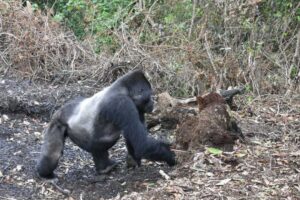
The Eastern Lowland Gorilla has suffered one of the steepest population declines of any great ape, plummeting from approximately 17,000 individuals in the mid-1990s to fewer than 7,000 today. Decades of habitat fragmentation and regional conflict pushed this majestic primate onto the IUCN Red List as Critically Endangered. While a devastating 2016 census estimated just 3,800 apes remained, intensive local conservation efforts have sparked a fragile, vital rebound. Current 2026 estimates suggest a slight recovery to around 6,800 wild individuals, highlighting a glimmer of hope that depends entirely on sustained protection.
2. Geographic Range: Where Do Grauer’s Gorillas Live?
Eastern Lowland Gorillas are found exclusively in eastern DRC, across the fragmented, mist-draped forests of the Albertine Rift. Their unique habitats span a vast altitudinal range, from lush tropical lowland rainforests to high-elevation montane forests. Today, their primary survival strongholds are anchored within protected zones, specifically Kahuzi-Biega National Park, Virunga National Park, Maiko National Park, the community-led Tayna Gorilla Reserve, and the rugged, high-biodiversity slopes of the Itombwe Massif.
The Vulnerability of Frontier Forests Outside Protected Zones
Unfortunately, a significant and highly vulnerable portion of the remaining population lives entirely outside these designated protected boundaries. In these unprotected frontier forests, the gorillas have no formal ranger protection, leaving entire families dangerously exposed to illegal mining camps, rapid agricultural habitat destruction, and commercial poaching. This lack of secure territory remains one of the greatest hurdles facing conservationists fighting to prevent the extinction of Grauer’s gorillas.
3. Major Threats Facing Wildlife in the Democratic Republic of the Congo
For decades, the Democratic Republic of the Congo (DRC) has faced recurring wars, insecurity, and political instability—deep-seated ills that have left profound scars on the region’s forests and wildlife. Since the early 1990s, these conflicts have triggered devastating domino effects. In South Kivu’s Kahuzi-Biega National Park (KBNP), for instance, poachers nearly wiped out elephants in the early 2000s , and gorilla populations plummeted. While a temporary subsidence of conflict, the gradual withdrawal of armed groups, and strengthened law enforcement eventually allowed wildlife numbers to begin recovering to pre-conflict levels, the reignition of the armed conflict in late 2021 has brought a severe and overlooked environmental crisis back to the forefront.
Environmental Impact of Conflict and Regional Displacement
The escalating M23 rebel war and broader armed conflict have sharply accelerated the rate of tree cover loss in both Kahuzi-Biega and Virunga National Parks. As violence has displaced communities and blocked access to traditional resources in North Kivu, immense humanitarian and environmental pressure has shifted directly to South Kivu. This conflict-driven crisis has impacted the environment in both expected and unexpected ways, driven by a mixture of mass population displacements, the total disruption of conservation law enforcement, and the active involvement of different armed actors in the exploitation of protected areas.
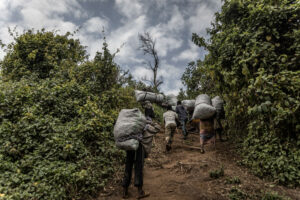
Crisis Breakdown inside Kahuzi-Biega National Park (KBNP)
Specifically, the ongoing crisis has manifested in several devastating environmental and humanitarian consequences within Kahuzi-Biega National Park:
- Escalated Deforestation: The massive influx of displaced people, combined with collapsed park monitoring, has accelerated the clearing of ancient forest. KBNP is currently experiencing devastating deforestation driven by land grabbing for agriculture by communities living near the park, illegal mining, and timber extraction.
- The Illicit Charcoal Trade: A primary driver of this deforestation is massive charcoal production. Both state and non-state armed groups profit handsomely by exploiting the park’s resources. In the case of the M23, the rebels are limiting themselves to taxing the illegal charcoal and timber trade coming out of these protected areas rather than halting it.
- Wildlife Threats: This rapid habitat fragmentation and escalated poaching directly endanger entire ecosystems and vulnerable wildlife. Critically endangered Grauer’s gorillas are becoming increasingly exposed, especially as fierce fighting near park boundaries repeatedly forces park rangers to restrict their patrols. Currently, park rangers and other conservation partners are left standing by helplessly, unable to safely enforce environmental laws.
- Impact on Indigenous Communities: The crisis strikes at the heart of the park’s human history. The indigenous Batwa populations face severe threats, including forced displacement from their ancestral lands and the profound destruction of their traditional livelihoods.
- Loss of Tourism: The severe regional instability has effectively halted eco-tourism. In South Kivu’s Kahuzi-Biega National Park (KBNP), for instance, poachers nearly wiped out elephants in the early 2000s , and gorilla populations plummeted.
Amidst this peril, environmental activists continue to sound the alarm on the ecological collapse of these world heritage sites. They do so at the constant, imminent risk of their lives.
4. Current Conservation Efforts and Anti-Poaching Initiatives
Despite immense challenges, critical initiatives are actively fighting to protect the Eastern Lowland Gorilla from extinction. On the front lines, dedicated park rangers and conservation NGOs conduct intensive anti-poaching patrols across rugged terrains, often risking their lives against armed groups to safeguard gorilla families. This dangerous field work is heavily amplified by international support from organizations like the Wildlife Conservation Society (WCS) and the Dian Fossey Gorilla Fund, which provide essential funding, ranger training, and cutting-edge ecological research to back these local efforts.
Simultaneously, long-term survival relies on community-based initiatives and economic incentives. Community-managed reserves, such as the Tayna Gorilla Reserve, directly involve local populations in conservation, fostering sustainable stewardship and alternative livelihoods. Furthermore, the immense eco-tourism potential of gorilla trekking in Kahuzi-Biega National Park stands ready to generate vital, self-sustaining revenue for both conservation programs and community development, provided regional security can be stabilized to welcome back international travelers.
5. Eastern Lowland Gorilla vs. Other Gorilla Subspecies
| Subspecies | Population (2026) | Range | Status |
| Eastern Lowland (Grauer’s) | ~6,800 | Eastern DRC | Critically Endangered |
| Mountain Gorilla | ~1,063 | Rwanda, Uganda, DRC (Virunga) | Endangered but stable |
| Western Lowland Gorilla | 100,000–200,000 | Central Africa | Endangered |
| Cross River Gorilla | <300 | Nigeria/Cameroon | Critically Endangered |
This comparison shows that while mountain gorillas have stabilized thanks to tourism and conservation, Eastern Lowland Gorillas remain in crisis.
6. Eco-Tourism Potential in Kahuzi-Biega National Park
Tourism has been an undeniable game-changer for mountain gorilla conservation and local economies in neighboring Rwanda and Uganda. This success begs a pivotal question: could sustainable tourism do the same for the critically endangered Eastern Lowland Gorillas of the Democratic Republic of the Congo? Currently, while the primary strongholds for these majestic primates are located within various protected areas across the region, Kahuzi-Biega National Park stands alone as the only destination equipped to welcome tourists for tracking and observing them in their natural habitat.
Unfortunately, the immense economic and ecological potential of the region remains heavily restricted. Other vital lowland gorilla habitats, including Maiko National Park, the Itombwe Massif, and Mount Tshiaberimu in Virunga National Park, are strictly limited to basic conservation and research. In these remote locations, persistent regional insecurity and a severe lack of basic tourism infrastructure completely prevent the hosting of international visitors, ultimately depriving the country of a significant source of sustainable eco-tourism revenue.
If regional stability improves and infrastructure develops, responsible tourism can thrive. This tourism provides a vital financial lifeblood. It funds long-term conservation and community development.
A well-regulated tourism model ensures fragile gorilla families receive heightened protection. Meanwhile, local communities benefit economically. This transforms wildlife preservation into a shared, profitable stewardship.
7. Outlook for the Future: How to Prevent Extinction
The future of the Eastern Lowland Gorilla hangs in a precarious balance. While wild populations have shown a fragile improvement since 2016, relentless threats from mining, poaching, and regional insecurity continue to jeopardize their long-term survival. Without urgent, decisive action, these critically endangered primates could face extinction within decades.
To prevent this tragedy, future priorities must focus on strengthening armed ranger patrols and security within protected areas. Simultaneously, expanding community-based conservation initiatives, promoting responsible eco-tourism in stable sectors, and securing robust international funding are vital. With sustained global awareness and dedicated local protection, there remains a genuine hope for recovery.
8. Conclusion: Protecting the Heritage of the Congo Basin
The Eastern Lowland Gorilla is one of the world’s most endangered primates, surviving only in the forests of eastern DRC. With fewer than 7,000 individuals left, their future hangs in the balance. Armed conflict, mining, poaching, and habitat loss continue to threaten their survival.
Yet, there is hope. Conservation efforts, community involvement, and the potential of eco-tourism could help secure a future for these magnificent gorillas. Protecting them is not only vital for biodiversity but also for the cultural and ecological heritage of the Congo Basin.
In conclusion, globalization is an intensifying reality. It connects industrial, commercial, and financial activities worldwide, regardless of location. However, the economy is not the only thing globalizing. Infectious diseases can originate in one nation and rapidly sweep across the globe. Furthermore, climate change impacts everyone universally. It spares no country, including major polluters and celebrated climate champions.
Similarly, the consequences of poor governance in the DRC will soon reverberate worldwide. This will happen if leaders fail to establish a responsible government. Multinational corporations and regional predators fuel this decades-long instability. Together, they exploit the country for their own economic gain.
If left unaddressed, the fallout from this protracted crisis will transcend borders and become a global problem.